选择语言


The HF01B-FC001 fiber optic slip ring, also known as an optical slip ring, is a specialized rotating connector designed to enable uninterrupted 360° rotation while transmitting optical energy and signals between stationary and rotating parts.
It supports single-mode fiber optic transmission and is suitable for applications requiring high-speed signal transmission, large information capacity, high precision, and long-distance communication. Compared with traditional electrical slip rings, fiber optic signal transmission is non-contact and non-frictional, helping reduce wear and improve transmission stability.
With low insertion loss, stable optical performance, and strong resistance to electromagnetic interference, this model is suitable for rotating systems used in industrial automation, robots, medical systems, radar systems, remote control systems, video surveillance systems, offshore equipment, naval systems, and other high-speed communication applications.
| Item | Specification |
|---|---|
| Product Type | Fiber Optic Slip Ring |
| Fiber Type | Single Mode Optical Fibre |
| Bending Radius | >R25 |
| Number of Circuits | 1 |
| Rotating Speed | 0–1000RPM |
| Operating Wavelength | 1310nm–1550nm |
| Working Temperature | -40°C to +85°C |
| Insertion Loss | <3dB |
| Working Life | 30–50 million turns |
| Insertion Loss Variation | ≤0.7dB |
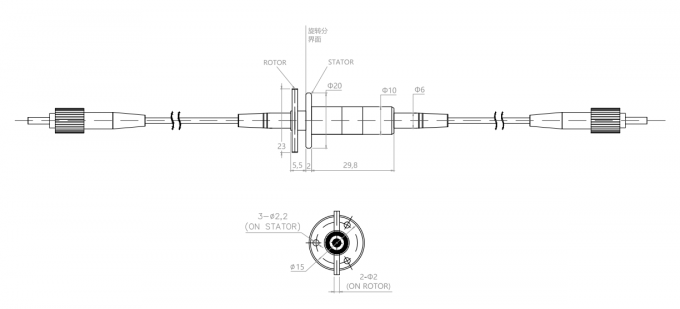
To select a suitable fiber optic slip ring, please confirm the following information:
Fiber type: single-mode or multi-mode
Number of fiber channels
Operating wavelength
Insertion loss requirement
Insertion loss variation requirement
Rotating speed
Bending radius requirement
Working temperature
Cable length and connector type
Installation space and structure
Whether electrical signal, power, or hybrid integration is required
If you are not sure which model is suitable, please send us your equipment requirements. Our engineers can help recommend a suitable fiber optic slip ring solution.
Uses patented optical coupling technology for stable optical signal transmission
Self-developed simplified coupling process, with no fiber collimators or coaxial adjustment required
One-time assembly design improves efficiency and helps ensure a high pass-through rate
Long service life, supporting 200–400 million rotations
Original low-loss optical coupling technology helps minimize signal loss
Sealed structure protects optical components from external environmental factors
Compact and lightweight design for easy integration with electrical slip rings
No leakage and no electromagnetic interference
Suitable for long-distance transmission, from tens to hundreds of kilometers
High-bandwidth transmission capability, offering larger bandwidth than electrical connectors
Compatible with wavelength division multiplexers for enhanced bandwidth utilization
| Application | Typical Use |
|---|---|
| Robots | Optical signal transmission in rotating robotic systems |
| Material Handling Systems | Stable data transfer in rotating handling equipment |
| Medical Systems | Signal transmission in precision medical equipment |
| Remote Control Systems | Optical communication in rotating control systems |
| Radar Systems | High-speed signal transmission in rotating radar structures |
| Rotating Turrets on Vehicles | Optical transmission in vehicle-mounted rotating systems |
| Video Surveillance Systems | Stable video or data transmission in rotating monitoring systems |
| Offshore Equipment | Reliable signal transmission in marine and offshore environments |
| Naval Systems | Optical communication in shipborne rotating equipment |
| National or International Security Systems | Signal transmission in security-related rotating systems |
| Submarine Operations Systems | Optical transmission for underwater and subsea rotating systems |
Service life: single mode ≥200 million rotations at 300RPM; multi mode ≥100 million rotations at 300RPM
Fiber transmission types
Power and signal configurations
Single-mode or multi-mode fiber options
Single-channel or multi-channel configurations
Product shape
Shell material
Drive connector
Fiber connector types, such as FC, LC, PC, ST, etc.
If the standard model does not meet your requirements, please send us your application details, including fiber type, channel number, wavelength, insertion loss requirement, rotating speed, bending radius, cable length, connector type, installation space, and working environment.
Our engineers can help confirm the suitable model or provide a customized fiber optic slip ring solution according to your equipment requirements.
Get a Quote
Download Datasheet
Request Drawing / 3D Model