选择语言

A practical checklist of the information needed when requesting a quote for an electro-optical slip ring
To prepare an accurate quote for an electro-optical slip ring, suppliers need to understand the electrical and optical transmission requirements, the mechanical design, and the operating conditions of the equipment. Providing these details at the beginning helps the engineering team evaluate a suitable configuration and identify any special integration requirements.
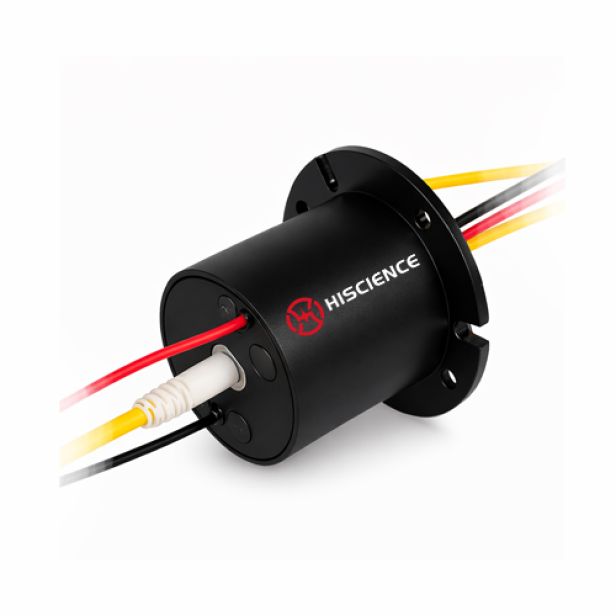
1. Mechanical and Installation Requirements
Start with the dimensions and mounting constraints of the equipment. Where possible, provide a drawing showing the available installation space and the relationship between the stationary and rotating parts.
l Required bore diameter, if a through-hole is needed
l Maximum allowable outer diameter and axial length
l Mounting method and interface dimensions
l Shaft arrangement and available installation clearance
l Mechanical drawing or assembly layout, if available
2. Electrical Transmission Requirements
Describe the electrical power and signal circuits that need to pass through the rotating interface. These details help determine the electrical section of the assembly.
l Number of circuits
l Rated voltage and current for each relevant circuit
l Whether power, control signals, sensor signals, or a combination is required
l Connector type, cable exit direction, and wiring preferences
l Any electrical isolation or other application-specific requirements
If different circuits have different loads or functions, list them separately rather than providing only a total circuit count.
3. Optical Transmission Requirements
The optical section should be specified according to the actual optical system used by the equipment. If these details are available, include:
l Number of optical channels or fibers required
l Fiber type, such as single-mode or multimode, if known
l Optical wavelength or wavelengths used by the system
l Connector type and interface requirements at each end
l Required optical performance, such as allowable insertion loss, if defined
l Data interface or application being carried over the optical link
If some optical specifications have not yet been selected, provide the transceiver or optical-module model, system datasheet, or communication requirements so the supplier can review the available information. For more detail on defining optical and electrical parameters, see “How to Define Optical and Electrical Requirements?”. Do not assume that every optical interface is compatible without confirming the relevant specifications.
4. Rotation and Operating Conditions
Operating conditions affect the configuration and should be included in the quotation request.
l Required rotational speed
l Continuous or intermittent rotation and typical duty cycle
l Expected service life or rotation-cycle requirements, if specified
l Operating temperature and humidity
l Exposure to dust, moisture, vibration, or other environmental factors
l Any special requirements for sealing, protection, or installation orientation
5. Integration and Application Details
An electro-optical slip ring may be part of a larger system, so information about the complete application can be just as important as individual component specifications.
l Equipment type and application
l Whether electrical power and optical data must be transmitted simultaneously
l Space limitations or restrictions on cable routing
l Existing electrical and optical interfaces
l Applicable standards or customer-specific requirements, if any
What Should You Send for an Initial Quote?
If the project is at an early stage and not every parameter is available, start with the following minimum information:
Category |
Required Information |
Application |
Equipment type and intended use |
Mechanical |
Bore diameter, available outer diameter and axial length, mounting method |
Electrical |
Circuit count, voltage, current, signal or power requirements |
Optical |
Channel count, fiber type and connector / interface details, if known |
Motion |
Rotational speed and continuous / intermittent operation |
Environment |
Temperature, humidity, dust, moisture and vibration conditions |
Supporting files |
Mechanical drawing, wiring diagram, optical-system datasheet or photos |
A preliminary request can still be reviewed when some items are unknown. Mark unknown values as “to be confirmed” and share the information already available. The supplier can then identify which details are essential for the next engineering review.
How to Help the Supplier Evaluate Your Request
For a more efficient quotation review, clearly separate confirmed specifications from estimates or open questions. If possible, include a mechanical drawing, wiring diagram, and optical-system information. Also explain any constraints that cannot be changed, such as installation dimensions, existing connectors, or required communication interfaces.
HISCIENCE Electro-Optical Slip Ring Solutions
HISCIENCE can review application requirements for rotating transmission systems and evaluate a suitable slip ring configuration based on the project details provided. The final configuration and performance should be confirmed against the specific application and product specifications.
Learn more about the HISCIENCE Electro-Optic Integrated Slip Ring.
Request a Quote
To discuss an electro-optical slip ring for your equipment, provide:
mechanical + electrical + optical + motion + environmental information
Contact Hiscience for a technical review.
Tel:+86-13543318795
+86-0755-23200548
Email:sales@hslipring.com
WhatsApp:+8613543318795
WeChat:13543318795
Address:3rd Floor, Building 1, Hengchangrong High-tech Industrial Park, No.128 Shangnan East Road, Shajing Subdistrict, Bao'an District, Shenzhen City